Small Hallway Storage Ideas Using Slim Shelves and Hooks
A hallway has to absorb everything the front door brings in: wet coats, muddy shoes, keys, a growing pile of post and at least one bag that never quite gets unpacked. In a narrow space, the answer is rarely a bigger cupboard. It is almost always shelves that sit 15 to 20 centimetres off the wall, plus hooks placed where hands actually reach. Get those two things right and a 90-centimetre-wide hall can stay clear enough to walk through with the shopping.
Measure the walking line before you buy anything
Stand in the hall with a tape measure and work out how much floor you can afford to lose. A clear walking width of around 75 centimetres feels comfortable; much below that and you will be turning sideways every time you carry a laundry basket through. Mark that line on the floor with masking tape and treat it as a boundary nothing may cross.
Then read the walls properly. Note the door swing, the depth of the skirting (a 2-centimetre shelf becomes a 4-centimetre shelf once it clears the skirting), the radiator, the light switch and any meter cupboard you still need to open. Finally, find out what the wall is made of. A hollow knock usually means plasterboard, which needs cavity fixings or a screw into a timber stud. If you are unsure whether a wall will take the weight of a loaded shelf, ask a qualified tradesperson rather than guess.
Slim shelves: the 15 to 20 centimetre rule
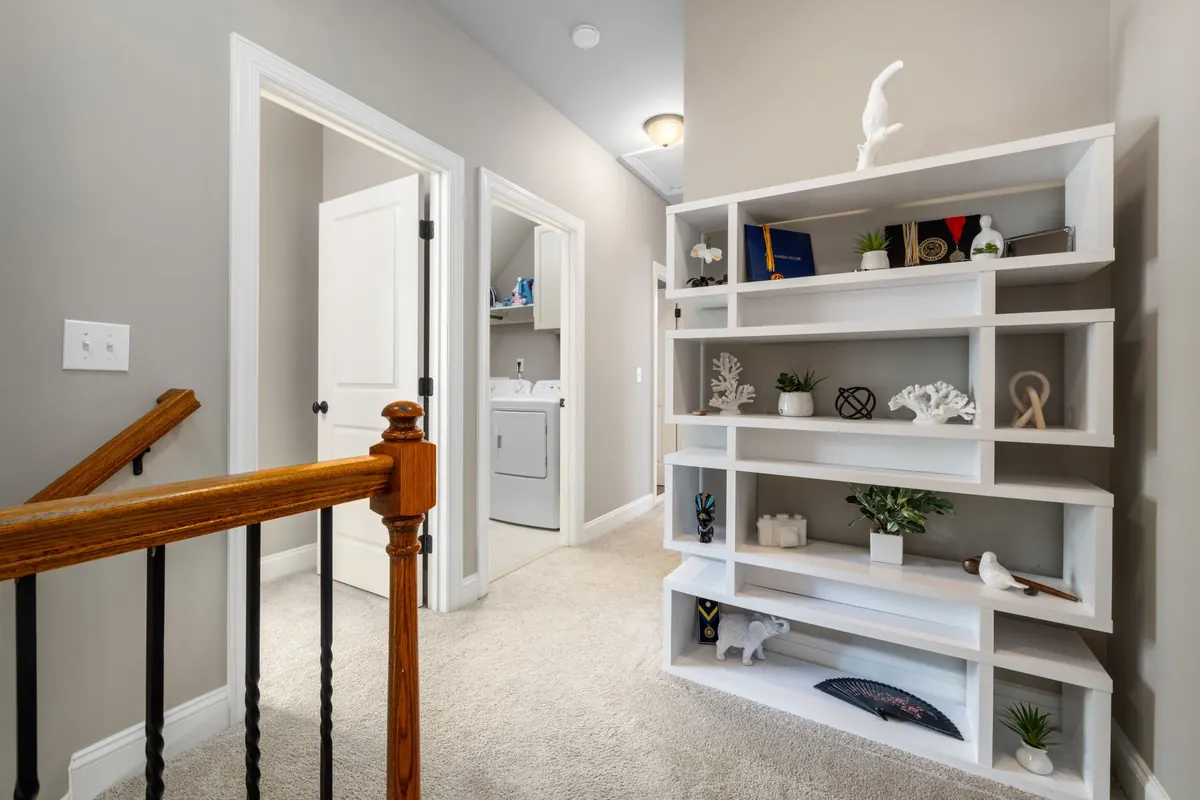
Slim shelving works because it uses the strip of space you were never going to walk in. Anything deeper than about 20 centimetres stops being storage and starts being a ledge for clutter, so keep the shelves shallow and go upwards instead.
- 12 to 15 centimetres deep: keys, gloves, post, a small torch, dog treats, folded letters.
- 15 to 20 centimetres deep, tilted: trainers and everyday shoes, resting toe-down against a small lip.
- 25 to 30 centimetres deep: adult shoes sitting flat, or a pair of boots if you can spare the floor line.
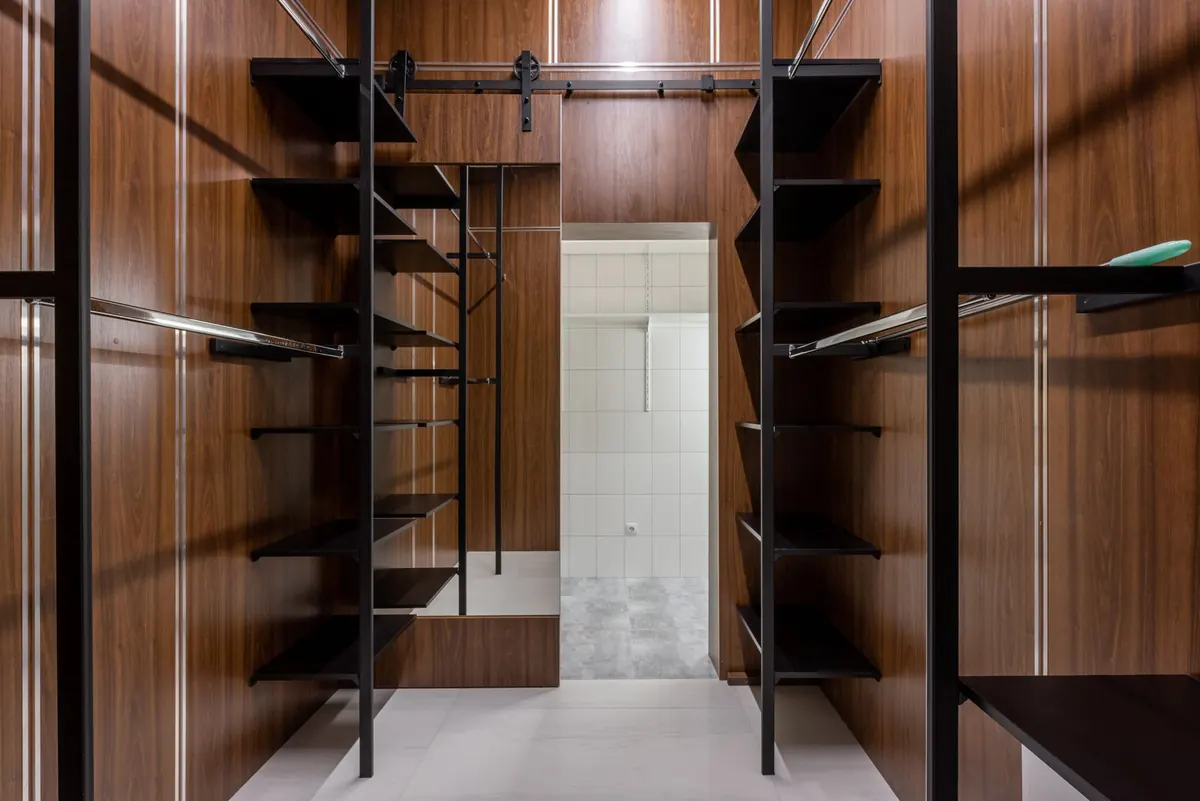
A practical set of heights for a hall shelf column: shoe tiers between 20 and 50 centimetres off the floor, a key shelf at about 1.1 metres, a rail for leads and brollies just under it, coat hooks between 1.6 and 1.75 metres, and baskets above 1.8 metres for spare bulbs, beach bags and out-of-season hats. Skip the space directly above a radiator for shoes or damp coats — warm, still air is not where you want wet canvas drying.
Hooks do more work than any shelf
A hook is the only storage that asks nothing of the floor. Space double-pronged coat hooks roughly 15 to 20 centimetres apart, and fit two rows if children use the hall: one at about 1.7 metres for adults, one at 1.1 metres so a seven-year-old can hang up their own coat without a stool.
Remember that a coat on a hook projects 25 to 30 centimetres into the hallway. In the tightest spot, one row of hooks on a return wall or behind the door beats two rows on the long wall. Fix a hook rail into solid timber or masonry wherever possible, use every screw hole in the rail, and give it a firm downward pull before you trust it. A soaked wool coat is surprisingly heavy, and one hook holding four bags will sag within a season.
If you rent, or cannot drill
Over-door hooks are the obvious shortcut, but check the door still closes and the gap above it is wide enough. Adhesive strips are fine for light items only — a lead, a lanyard, a shopping bag — not for coats. A freestanding slim shoe rack and a tension rod in an alcove will hold the rest without a single hole.
Shoes without eating the floor
Shoes are the reason most hallways feel blocked. Stack them instead of lining them up. Two tall tilt racks placed side by side give you double the pairs on the same footprint, and a slim shoe cabinet 20 to 25 centimetres deep with tip-down drawers hides everything behind a closed front. Keep one shallow tray with a raised lip by the door for wet pairs, and a 40-centimetre gap on the bottom shelf for wellies and boots. Out-of-season shoes go into labelled boxes up high; three or four pairs by the door is plenty for most households.
Keys, post and the daily debris
These are the things that end up on the stairs if they have no home. Give them one:
- A small shelf with a lip at about 1.1 metres, wide enough for a bowl and a stack of letters.
- Cup hooks screwed underneath it for keys, so nothing gets buried.
- Two slots for post — one marked for today, one for later. A shallow basket on the shelf does the job.
- A slim bin or bag behind the door for paper recycling, and a basket for the dog lead and umbrella.
If you want a tidier look, choose one finish for everything: the same pale timber or the same matt black hooks and brackets. Continuity makes a small, busy space read as deliberate rather than crowded.
A layout that works in a 90cm hallway
- Tape out your walking line and keep it clear.
- Pick the longest uninterrupted wall for a vertical shelf column — shelf, shelf, shelf, hooks above.
- Put the heaviest storage low, where fixings and floor take the load.
- Use the wall behind the door only if the door swing clears it by at least 10 centimetres.
- Add hooks last, once you can see where coats naturally land.
- Leave one clear landing spot within arm's reach of the door for keys and post.
Test it with a wet coat and a bag of shopping
Come in through the front door carrying shopping. Can you shut the door, drop the bags, take off a wet coat, step out of your shoes and put the post down without turning sideways or piling anything on the floor? If not, one hook is in the wrong place or one shelf is the wrong height — both are easy to move.
Do a five-minute reset each week and a proper seasonal swap twice a year: summer sandals up, winter boots down, coats that nobody wore into a donation bag by the door. Slim shelves and well-placed hooks only work when they are holding the things you actually use, and a narrow hallway stays generous as long as your storage stays honest.
Photo: Curtis Adams / Pexels
You Might Also Like
A practical guide to no-drill shelving for UK renters: tension poles, adhesive strips, freestanding units and removable fixes, with fitting tips and deposit-friendly habits.
Practical rules for styling open shelves in kitchens, living rooms and bedrooms, covering books, plants, ceramics and the negative space that keeps a display calm.