How to Organise a Pantry with Adjustable Shelving
Most pantry shelves are set at heights that suited the day they were fitted — not the shopping you bring home now. That is why a row of tins rattles around under 30cm of wasted air while a cereal box has to lie on its side, splitting the bag inside.
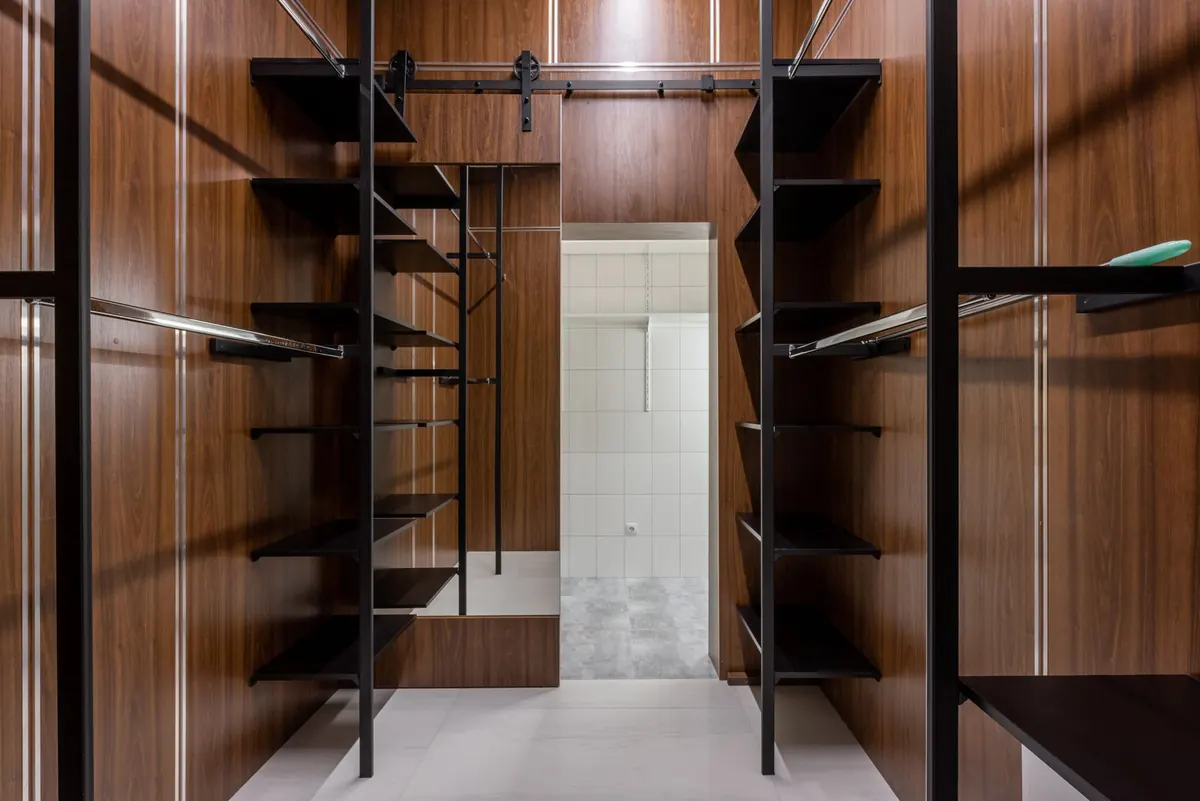
Adjustable shelving solves most of this, as long as you plan it around what you actually store. Measure your awkward items, decide your zones, then let baskets and labels do the tidying.
Measure your tallest items before you move a bracket
Empty one shelf at a time rather than the whole pantry, unless you enjoy chaos at teatime. Put the contents on the worktop and pick out the awkward characters: the cereal box, the two-litre bottle of oil, the 1.5kg bag of flour, the jar of pickled onions that only ever fits at an angle.
Measure those and write the numbers down. Then add a couple of centimetres for your fingers — a shelf that clears a cereal box by two millimetres is a shelf you will fight with every morning.
Useful starting points:
- 18–22cm: tins stacked two high, small jars, spice jars in a single row, stock cubes
- 25–30cm: standard jars, upright flour bags, packets of pasta and rice standing on their ends
- 35–42cm: cereal boxes, oil bottles, bulk bags, a blender or hand mixer
- Bottom shelf: 35cm or more for sacks, bulk tins and heavy appliances
- Top shelf: whatever fits, but keep it light — you will need a step to reach it
Most track-and-bracket systems move in small increments, so you can fine-tune later without rebuilding anything. Keep the spare brackets and shelf pins in a labelled jar so you know where they are when you need them.
Group ingredients by how you cook, not by which aisle they came from
Supermarkets arrange food by aisle. You cook by task, so arrange the pantry the same way. Baking ingredients belong together even though flour, sugar, dried fruit and baking powder live in three different parts of the shop.
The grouping that works in most kitchens: baking; cooking from scratch (tins, pasta, rice, stock); breakfast (cereal, oats, jam, honey); hot drinks and spices; and snacks.
Then think about frequency. Whatever you reach for daily should sit between waist and eye level, where you can take it without bending or stretching. Heavy things go low — lifting a sack of rice down from above your head is a nuisance, and weight near the floor keeps the unit stable. Rarely used items go high.
A five-zone layout that suits most pantries
- Everyday shelf (eye level): tea, coffee, salt, the oil you cook with, the four or five spices you use weekly.
- Cooking shelf (waist level): tinned tomatoes, beans, pulses, pasta, rice, stock.
- Baking shelf (below waist): flour, sugar, baking powder, cocoa, dried fruit — heavy, so keep it low.
- Breakfast and snacks (above waist): cereal, oats, jam, honey, nuts, biscuits.
- Top shelf and back corners: bulk buys, spares, seasonal items, the tub of gravy granules you keep for Christmas.
Adjust the zones to your own cooking. If you bake most weekends, baking deserves the eye-level space and the cereal can move up a shelf.
Use baskets to rescue short shelves
Short shelves are the hardest to use because loose packets slide and topple. A basket or shallow box turns a 20cm shelf into a pull-out drawer: you lift the whole thing out, find what you need, and slide it back. Wire and clear plastic show the contents at a glance; solid baskets hide the mess but also hide the fact that you have four packets of custard powder.
Two more small additions earn their space. A turntable in a deep corner brings the bottles at the back to the front when you spin it. A narrow riser at the back of a shelf keeps short jars visible behind taller ones.
Measure the basket before you buy it, and measure the shelf height with the basket in place. A deep basket can swallow 10cm of clearance — exactly the clearance you fought for.
Decant selectively, not religiously
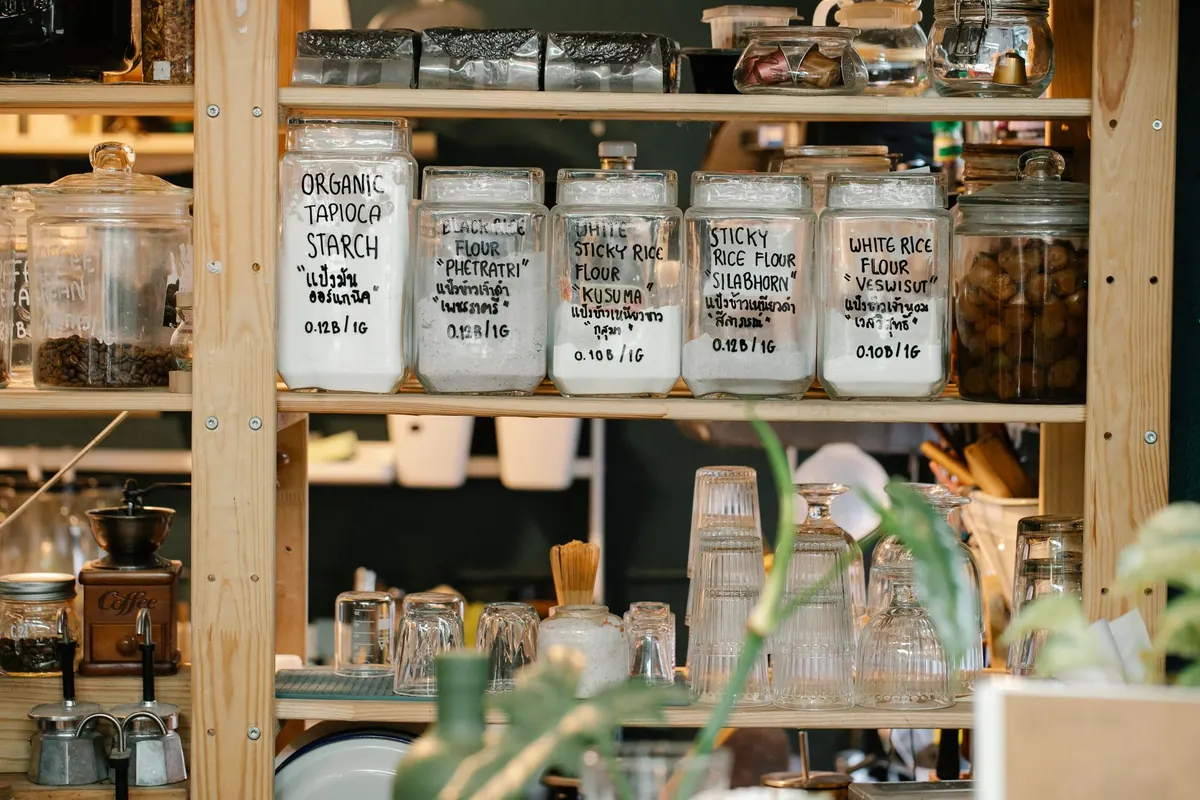
Matching glass jars look lovely in photographs and become a nuisance in real kitchens if you overdo it. Decant what you use often and can recognise instantly: flour, sugar, rice, oats, cereal. Keep the original packet tucked inside, or cut out the cooking instructions and use-by date if you need them, and write the date on the jar.
Skip decanting for anything you use twice a year, and be honest about spices. A dozen unlabelled jars of brown powder is worse than the original jars, which at least tell you what they are.
Label so it works when you are tired
A good label answers two questions: what is this, and when did I open it? Shelf-edge labels work well for categories such as "baking", "tins" and "spares", because they survive you swapping the contents around. Container labels should carry the contents and the date in a size you can read while standing.
Chalk pens wipe off glass and plastic, and write-on tape peels away cleanly when you change your mind. Whatever you choose, be consistent. One clear system beats three clever ones.
Keep it working
An organised pantry drifts. The fix is small and regular rather than heroic and annual.
- Once a month, spend five minutes pulling forward anything close to its date and putting it in a "use first" basket at eye level.
- Keep a running shopping list on the inside of the door for anything you finish.
- Apply one-in-one-out to duplicates: no new jar of mustard until the open one is done.
- Move a shelf when your shopping changes — that is the whole point of adjustable shelving.
Most shelves need adjusting once or twice a year: after Christmas, after a change in diet, or when you start buying rice in 5kg sacks instead of 1kg bags.
Set the shelves, then let them move
The best pantry is not the one that looks perfect on the day you finish it. It is the one you can change in five minutes when your cooking does. Set your heights around your tallest items, group by task, put the everyday things where your hands naturally fall, and use baskets to make the awkward shelves earn their place.
Then keep the spare brackets somewhere you will find them. The next adjustment is always closer than you think.
Photo: Sarah Chai / Pexels
You Might Also Like
A practical guide to no-drill shelving for UK renters: tension poles, adhesive strips, freestanding units and removable fixes, with fitting tips and deposit-friendly habits.
Practical rules for styling open shelves in kitchens, living rooms and bedrooms, covering books, plants, ceramics and the negative space that keeps a display calm.